
Aligning student growth and staff development to drive school-wide transformation.
Equipping educators to build learning environments where students lead, grow, and thrive.

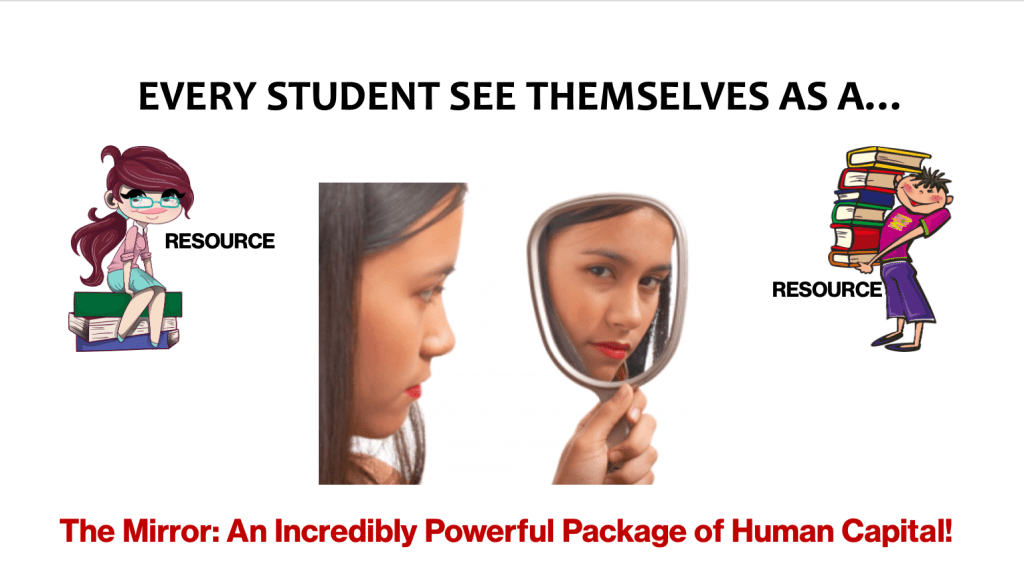
“Nothing about us without us.” The adage—long echoed in youth‑led movements—should be the heartbeat of every classroom. When students feel heard, entrusted with meaningful choices, and supported by adults who model care and high expectations, schools become engines of possibility. Empowering Students and Equipping Educators, a professional‑development series, braids student‑centered programs with staff capacity‑building so that empowerment is not an isolated lesson or a poster on the wall—it is the culture. The most important objective here is for all students to fully understand WHY they are in school: To build their human capital, see themselves as the primary resource they will ever have, and to make informed decisions in all aspects of their life.
Why Empowerment Now?
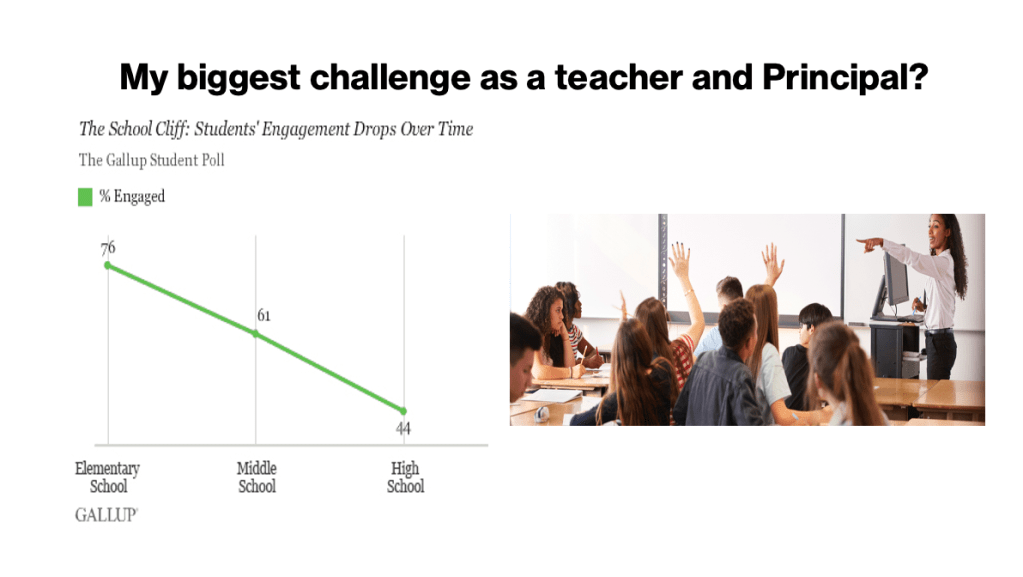
Post‑pandemic data paint a mixed picture: chronic absenteeism is up, disciplinary referrals remain stubbornly high in many districts, and teachers report record levels of burnout. Yet schools that intentionally elevate student agency and cultivate responsive adult practices consistently post stronger attendance, higher GPA averages, and lower suspension rates. In other words, empowerment is not a feel‑good add‑on; it is a research‑based driver of academic and socio‑emotional success.
Pillar 1: Student‑Focused Programs
| Student Program | What Students Gain | Metrics That Move |
| Social‑Emotional Learning (SEL) | Emotional regulation, empathy, resilience, growth mindset, locus of control | ↓ Bullying, ↑ GPA & attendance, ↓ discipline referrals |
| Restorative Justice | Accountability, conflict resolution, belonging | ↓ Suspensions, ↑ safety perception, ↓ discipline referrals |
| Student‑Voice Initiatives* | Leadership, civic engagement, ownership of learning | ↑ Engagement surveys, ↑ graduation rate,↑ student participation |
| Peer Counseling & Tutoring | Communication, deeper mastery, peer bonds strengthened, leadership experiences | ↑ Course‑pass rates, ↓ absenteeism, ↓ discipline referrals |
| Economic Way of Thinking | Cost–benefit reasoning, ↑ human capital, increased motivation and discipline, students view themselves as their greatest resource, effective and informed decision making | ↑ Financial‑fluency, ↑ GPA & attendance |
*Examples include student‑led conferences, advisory councils, participatory budgeting, journalism teams, and inclusion on hiring committees. Taken together, these programs teach students to lead with empathy, think critically about choices, and translate voice into action. The payoff is both qualitative—classrooms feel vibrant—and quantitative: fewer discipline referrals, higher attendance, and healthier climate‑survey results.


Pillar 2: Staff‑Focused Programs
Empowerment collapses without adults who can nurture, model, and scaffold it. These professional development programs for school staff, when implemented correctly, align directly with the student experiences above:
| Staff Program | Supported Student Initiatives | What Educators Gain | Metrics That Move |
| PBIS & Progressive Discipline | SEL, Restorative Justice | Equitable, consistent systems; de‑escalation skills | ↓ Office referrals, ↑ instructional minutes |
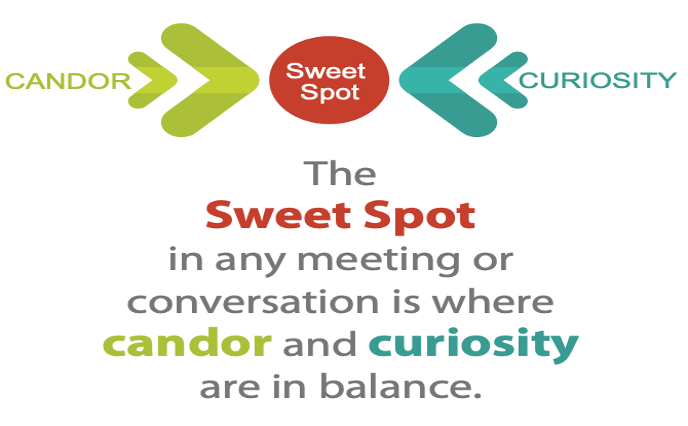
| Conversational Capacity | Student Voice, Peer Counseling | Facilitation of psychologically safe dialogue, conflict resolution skills, enhanced conversational candor and curiosity | ↑ Collaboration scores, faster conflict resolution, success in overcoming challenging situations |
| Culture & Climate Design | All of the above | Vision‑building, recognition systems, community rituals, ↑ trust and respect, high expectations for learning and behavior, supportive relationships, shared leadership and collaboration | ↑ Staff satisfaction, ↓ turnover, |
| PLC Collaboration & Co‑Teaching | Student Voice, Economic Thinking | Data‑informed planning, cross‑disciplinary integration, better conversations | ↑ Instructional quality, ↑ student achievement |
| Trauma‑Sensitive Classrooms | SEL, Restorative Justice | Trauma recognition, self‑care, wellness practices | ↓ Disruptions, ↑ engagement, ↓ staff burnout |
| Engaging & Differentiated Instruction | Student Voice, Economic Thinking | Choice‑rich lesson design, culturally responsive pedagogy | ↑ Participation, ↓ achievement gaps |
These core school programs do more than add tools to a teacher’s toolbox—they shift mindsets from compliance to partnership. Educators learn to rename behaviors through an asset‑based lens, to reframe discipline as relationship repair, and to cultivate a culture of care where every student identity is honored. Essentially, if executed with a sense of professionalism and fidelity, they help all students orient themselves as the center of the learning process and see school as a vehicle for developing their human capital (investing in oneself) which is their meal ticket and to help them realize their dreams and goals.
The Empowerment Equation in Action
Consider a ninth‑grade history class piloting the full framework:
- Student Voice – Learners co‑design a mini‑unit on immigration, selecting sources and co‑creating rubrics.
- Economic Way of Thinking – They apply cost–benefit analysis to historical decisions, internalizing that choices carry trade‑offs—a parallel to their own academic habits.
- Restorative Justice – When a debate becomes heated, the class pauses for a student‑led restorative circle, repairing harm before it festers.
- Teacher Moves – The educator, trained in conversational capacity and trauma‑sensitive practice, guides reflection through open‑ended prompts rather than punitive measures.

By semester’s end attendance is up three percentage points or more, office referrals drop to near zero, and students’ end‑of‑course assessment shows a ten‑point gain over the previous cohort. Hard numbers validate the intuitive truth: when students feel ownership, they invest more deeply in learning; when teachers feel supported, they remain inspired guides.
Making It Happen
Empowering Students and Equipping Educators needs to be delivered as a blended experience:
- Kick‑off Institute – A two‑day, in‑person summit that introduces both tables of programs in hands‑on workshops.
- Coaching Cycles – Monthly virtual zoom meetings where teachers analyze discipline data, swap lesson plans, and refine restorative practices. This is where the real juice is — practicing, developing habits, and refining learned concepts and strategies over time with the help of a competent coach.
- Student Design Labs – Quarterly sessions in which students and staff co‑create new voice initiatives, ensuring the framework evolves with learner needs.
- Metrics Dashboard – A shared data tool that tracks the indicators above in real time, turning hunches into visible progress.

Call to Action
If your school is ready to replace fragmented initiatives with a coherent empowerment strategy—one that aligns student voice with staff capacity to produce measurable gains—join us. Let’s craft campuses where every hallway echoes with agency, every classroom pulses with engagement, and every graduate departs with the skills and mindsets to thrive.
 School Empowerment Group
Leave a comment